

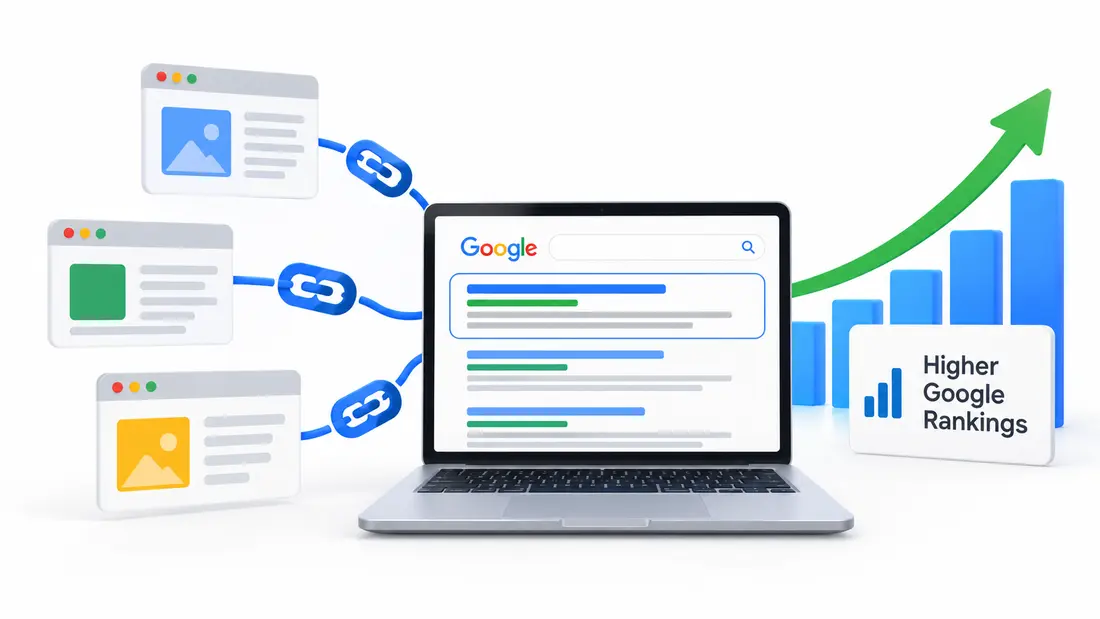
Backlinks can make a real difference to your SEO efforts. When another website links to your content, it gives readers a way to find your page and helps Google discover how different pages across the web connect. Links from relevant, reputable websites can also support your site’s credibility in search results.
But here is something worth understanding: getting more backlinks does not automatically mean getting higher rankings. A website with hundreds of links can still struggle to rank if its content does not answer what people are searching for. Meanwhile, a smaller website with useful content and links from trusted industry sources can compete for valuable keywords.
So, how do backlinks help improve Google rankings, and what should you focus on when building links for your website?
Let’s look at how backlinks work, what makes them valuable, and how you can build a link profile that supports your long-term SEO goals.
What Is a Backlink in SEO?
A backlink is a link from one website to another. It is also known as an inbound link or an external link.
For example, imagine you publish a guide about email marketing for small businesses. A marketing blog later writes an article about email campaigns and links to your guide as a useful resource. That link is a backlink pointing to your website.
Backlinks connect pages across the internet. They help readers discover related information and give search engines ways to find pages they might not have discovered otherwise.
There are three common types of links worth knowing about:
- Backlinks: Links from other websites that point to your website.
- Internal links: Links that connect one page on your website to another page on the same website.
- Outbound links: Links from your website to pages on other websites.
Each serves a different purpose. Backlinks can support your site’s reputation and discovery, while internal links help visitors move around your site and help search engines understand how your pages relate to one another.
For SEO, the goal is not simply to collect links. It is to earn links that make sense for your content and provide genuine value to readers.
How Do Backlinks Help Improve Google Rankings?
Backlinks can influence SEO in several ways. Their value depends on where they come from, how they relate to your content, and the circumstances in which they were created.
1. Backlinks Can Signal Credibility and Authority
Think about how you choose a product or service. If several knowledgeable people recommend the same business, you may feel more confident about considering it.
Backlinks can work in a similar way across the web. When a reputable website links to your page because it offers useful information, that link can act as an endorsement of your content.
Google uses links as part of its search systems. Links can help its systems understand how pages relate to one another and assess the value of different pages. However, a link is not a guarantee that Google will consider a page trustworthy or rank it higher.
For example, suppose you run a software company and publish an in-depth guide to customer relationship management. If respected business publications and relevant software blogs reference your guide, those links may support your site’s credibility within that subject area.
The important detail is why the links exist. A link earned because your content helps readers has a stronger editorial basis than a link created purely to influence search rankings.
2. Relevant Backlinks Can Support Topical Relevance
Not every website covers the same subjects, and that matters when building backlinks.
A link from a website that regularly publishes content about your industry may provide more relevant context than a link from an unrelated website. The linking page, surrounding content, and destination page all help explain the relationship between the two resources.
Consider a company that sells project management software. A backlink from a respected business technology blog discussing team productivity is closely related to its subject matter.
Now imagine that the same company receives a link from an unrelated entertainment website. The link might still send visitors, but the connection between the two pages is less obvious.
This does not mean links from unrelated websites are always useless. A genuine mention can still help readers discover your business. However, when your goal is SEO, links from relevant sources are often a sensible place to focus your efforts.
A good rule is to ask yourself one question before pursuing a backlink: Would this link make sense to someone who is already interested in my topic?
If the answer is yes, the link is more likely to have a genuine purpose beyond SEO.
3. Backlinks Help Google Discover New Pages
Search engines need to find pages before they can consider them for search results. Links are one way Google discovers content across the web.
When Googlebot visits a page and finds a link to another page, it may follow that link and discover the destination. This can be useful for new websites, recently published articles, and pages that do not yet have many connections to the rest of the site.
Imagine publishing your first detailed guide on a new website. You have added it to your sitemap and linked to it from your blog, but few other websites know it exists.
If a relevant industry website later links to that guide, Google may discover the page through that external link as well.
Keep in mind that discovery and indexing are different things. Finding a page does not guarantee that Google will index it, and indexing does not guarantee a strong ranking.
To give new pages a better chance, combine useful external links with a clear site structure, relevant internal links, and content that answers the reader’s question.
4. Backlinks Can Bring Relevant Referral Traffic
SEO is not the only reason to earn backlinks. A useful link can bring visitors directly from another website.
Suppose a popular marketing blog mentions your email marketing guide in an article about growing an email list. Readers who click that link may already be interested in your topic.
Some might read your article, explore other pages, sign up for your newsletter, or contact your business.
That traffic has value even if the link does not lead to a noticeable ranking change.
Relevant referral visitors can also introduce your brand to people who might return later, recommend your content, or reference it in their own articles. These outcomes are not guaranteed, but they are good reasons to think beyond backlink counts.
When reviewing a link opportunity, consider both its SEO relevance and its ability to introduce your content to the right audience.
5. Backlinks Can Support Your Overall SEO Strategy
A successful SEO strategy rarely depends on one factor. Content quality, technical performance, search intent, internal linking, and external links all have different jobs.
Backlinks can support this broader effort by connecting your content with reputable sources across your industry.
For example, a website that publishes useful research, answers common customer questions, and earns genuine mentions from relevant publications may build a stronger presence in its market over time.
Compare that with a website that spends its entire SEO budget buying large numbers of links while publishing thin, repetitive articles. Even if the second website has a higher backlink count, it may struggle to satisfy searchers or compete for valuable queries.
The lesson is straightforward: build links to pages that deserve attention. Give people a useful reason to reference your content, and support those pages with a sound website structure and helpful information.
What Makes a Backlink Valuable to Google?
Backlink quality depends on more than a single metric. Before pursuing a link, look at its relevance, source, placement, and editorial purpose.
Relevance of the Linking Website
A link from a website that covers subjects related to yours can provide a clear connection between the linking page and your content.
For instance, a cybersecurity company may benefit from being mentioned in a relevant technology publication that discusses online security. The link fits naturally within the topic and gives readers a useful next step.
Relevance does not mean every link must come from an identical niche. Related industries and broader publications can also provide useful links when the reference makes sense.
Website Reputation and Editorial Standards
Look at the quality of the website before judging a backlink opportunity.
Does the publisher create useful content? Does it have a clear audience? Are its articles written for readers, or does the site appear to exist mainly to publish paid links?
A website’s reputation and editorial standards can tell you more about a potential link than a single third-party SEO score.
Metrics such as Domain Rating and Domain Authority can help with prospecting, but they are not Google ranking factors. Treat them as reference points rather than proof that a link will improve rankings.
Placement Within Useful Content
Where a link appears can affect how useful it is to readers.
A contextual backlink placed within an article that discusses your subject may give readers a natural reason to visit your page. For example, a link to a detailed SEO checklist inside a guide to website optimization makes sense because it helps readers take the next step.
By contrast, a link placed in an unrelated paragraph or hidden among dozens of unrelated links may offer little value to visitors.
The surrounding content should explain why the linked resource is relevant.
Natural and Descriptive Anchor Text
Anchor text is the clickable wording used for a link. It helps readers understand what they can expect when they open the destination page.
For example, an article about SEO may link to a guide using the anchor text “technical SEO checklist.” This tells readers what the linked page covers.
Anchor text should fit the sentence naturally. Repeating the same exact-match keyword across large numbers of backlinks can look manipulative, especially when the links are created to influence rankings.
A natural backlink profile may contain branded anchors, descriptive phrases, URLs, and other wording that reflects how different publishers reference your content.
Referring Domains and Link Diversity
A referring domain is a website that links to your site.
If one website links to your page ten times, that is different from receiving links from ten separate websites. Both situations can have value, but they represent different patterns of recognition.
Links from multiple relevant, reputable sources can show that your content is useful to different publishers and audiences.
Still, diversity should not become a numbers game. Ten weak websites are not automatically better than one excellent editorial mention. Focus on the quality and purpose of each link rather than chasing a target number of referring domains.
Editorial Placement and Link Attributes
Editorial links are included because a publisher chooses to reference a resource. This is different from links created or purchased mainly to manipulate search rankings.
You should also understand link attributes such as rel="nofollow" and rel="sponsored". Paid placements should be qualified appropriately, and Google’s policies explain how these attributes help identify different types of links.
A link’s commercial purpose, context, and editorial value matter more than the assumption that every backlink must pass ranking credit.
Do More Backlinks Mean Higher Google Rankings?
No. A higher backlink count does not guarantee better Google rankings.
It is easy to look at a competitor with thousands of backlinks and assume that matching its numbers will help you outrank it. But that approach overlooks the quality of the links, the pages receiving them, and the many other factors involved in search performance.
Consider two websites competing for the same keyword.
Website A has hundreds of backlinks, many of which come from unrelated sites or pages created mainly for link placement. Website B has fewer links, but its content answers the searcher’s question more clearly, its website is easier to navigate, and its backlinks come from relevant industry publications.
Website B may still rank higher because search performance depends on more than link volume.
There is also no universal number of backlinks required to reach the first page of Google. A local business keyword may have different competitive requirements from a broad software or finance keyword.
Instead of setting an arbitrary backlink target, review the pages already ranking for your target search terms. Study their content, search intent, link profiles, and overall website quality. Use that information to identify realistic opportunities for your own site.
Which Types of Backlinks Can Support SEO?
Different types of backlinks can help readers discover your website. The best opportunities are those that fit your content, audience, and business goals.
Editorial Backlinks
Editorial backlinks appear when a publisher references your content because it provides useful information, evidence, or an example.
These links can be valuable because the publisher chooses to include them as part of its editorial work. Original research, practical guides, and useful resources give other websites a reason to cite your pages.
Guest Post Backlinks
Guest posting involves contributing an article to another website. It can help you reach a new audience, share your knowledge, and introduce readers to your business.
The key is to create content that serves the publisher’s audience. A guest article should offer useful information rather than exist solely to insert a backlink.
Large-scale guest posting with keyword-rich links created mainly to manipulate rankings can violate Google’s spam policies. Choose genuine publishing opportunities and follow the site’s editorial requirements.
Contextual Backlinks
Contextual backlinks appear within the main content of a page. They can provide a useful connection between two related resources.
For example, a guide about improving organic traffic might reference a detailed article about keyword research. Readers can follow the link when they want more information about that specific topic.
Context alone does not make a backlink valuable. The source, surrounding discussion, and reason for the link all matter.
Resource Page Links
Some websites maintain resource pages that collect helpful tools, guides, templates, and industry references.
If you have created a genuinely useful resource, you can contact relevant website owners and explain why it may be a good fit for their page.
Avoid sending generic requests to hundreds of unrelated sites. A short, relevant message that explains the value of your resource is a better starting point.
Digital PR Backlinks
Digital PR aims to earn coverage and mentions from publications, journalists, and industry websites.
You might share original survey results, offer expert commentary, publish industry data, or provide a useful response to a current business question.
The aim is to give publishers something worth discussing. A strong story or useful data point can earn attention beyond the immediate SEO benefit.
How to Build Backlinks That Support Google Rankings
Building a useful backlink profile takes planning and consistent effort. You do not need to chase every opportunity that appears in an SEO tool.
Here are practical ways to get started.
1. Publish Content Worth Referencing
Create pages that answer real questions and offer something useful to your audience.
Examples include:
- Detailed industry guides
- Original surveys and research
- Free templates and calculators
- Practical tutorials
- Case studies with clear findings
- Useful statistics and data collections
Think about the questions people in your industry ask repeatedly. If your page gives them a clear answer, saves time, or provides evidence they can reference, other publishers may have a reason to link to it.
2. Find Relevant Websites in Your Industry
Build a list of websites that publish content related to your topic.
Look at industry publications, respected blogs, business resources, and websites that already reference similar content. Review their editorial standards and the type of material they publish.
A smaller list of well-matched websites is often more useful than a huge list of random prospects.
3. Personalize Your Outreach
When contacting a publisher, explain why your content fits its audience.
Mention the article you read, identify a relevant information gap, and describe how your resource could help its readers. Keep the message short and specific.
For example, if a website has published a guide to email marketing but lacks a practical template, you could introduce your own template if it genuinely adds value.
Avoid generic messages that ask for a backlink without explaining what the publisher or its readers would gain.
4. Contribute Useful Guest Articles
Look for publishers that accept expert contributions and reach an audience relevant to your business.
Study their existing articles before pitching a topic. Offer a fresh angle, useful examples, and information that fits their readers’ needs.
Do not build your entire strategy around guest posts. Use them as one option among several ways to reach people and earn relevant editorial mentions.
5. Find Broken or Outdated Resources
Some websites link to pages that no longer exist or contain outdated information.
If you have a relevant resource that provides a suitable replacement, you can contact the website owner and explain the issue. Your page should genuinely help readers who follow that link.
This approach works best when the replacement covers the same subject and offers useful information. A broken link is not an invitation to promote an unrelated page.
6. Track Your Backlink Profile
Review new and lost backlinks on a regular schedule. Check which pages attract links, which websites reference your content, and whether the links are relevant to your business.
You can also use Google Search Console to review your site’s reported links and monitor organic search performance.
Do not judge success by the number of links acquired alone. Look at the quality of the opportunities, referral traffic, search visibility, and conversions.
Which Backlink Practices Should You Avoid?
Some link-building tactics can create more risk than value. Google’s spam policies cover links created primarily to manipulate search rankings.
Here are practices to avoid.
Buying Links to Manipulate Rankings
Paying for a link specifically to gain ranking credit can violate Google’s link spam policies. Paid placements should use the appropriate link attributes, such as rel="sponsored" or rel="nofollow" where applicable.
If you sponsor content or advertise on another website, make the commercial relationship clear and qualify the links properly.
Participating in Link Schemes
Excessive reciprocal linking, private blog networks, and arrangements designed mainly to manipulate rankings can put your website at risk.
There is a difference between naturally referencing a business partner and creating a network of websites to manufacture ranking signals. Focus on legitimate relationships and links that make sense for readers.
Publishing Low-Quality Guest Posts
Publishing large numbers of articles on unrelated websites just to insert backlinks is a poor approach.
Guest contributions should provide useful information to the publisher’s audience. Choose relevant sites, follow editorial standards, and avoid producing repetitive content solely to gain links.
Using Automated Link-Building Tools
Tools that automatically create links across websites, comments, forums, or other platforms can generate unnatural patterns.
Automation can be useful for prospect research, reporting, and organizing outreach. It should not be used to manufacture links at scale or bypass editorial judgment.
Ignoring Link Qualification
Not all links should be treated the same way. Paid placements, sponsored content, and certain user-generated links may require appropriate attributes.
Follow Google’s published guidance for link qualification. If a link is part of a commercial arrangement, do not present it as an independent editorial endorsement.
Violating search spam policies can lead to ranking losses or other visibility problems. A safer strategy is to earn links through useful content, genuine relationships, and sound editorial practices.
How Long Does It Take for Backlinks to Affect Google Rankings?
There is no fixed timeline for backlinks to influence search performance.
A new link may be discovered quickly, while another may take longer to appear in Google’s systems. Even after Google finds a backlink, you should not expect an immediate change in rankings.
Several factors can affect the outcome:
- How quickly Google discovers the linking page and destination page
- Whether the destination page is indexed
- The relevance and quality of your content
- Competition for your target keyword
- The strength of your overall website and SEO work
- Changes in Google’s search systems and competing pages
For example, a backlink to a well-written page that already ranks near the top of the results may have a different effect from a link to a new page with little supporting content.
Give your SEO efforts time, but do not rely on patience alone. Review your performance regularly, improve pages that do not meet search intent, and continue earning links from relevant sources.
Avoid anyone who promises a specific ranking position within a guaranteed number of days simply because you acquired a set number of backlinks.
How to Measure the SEO Value of Backlinks
Tracking your results helps you understand whether your link-building work supports your business goals.
Rather than focusing on one metric, review several indicators together.
Organic Clicks and Impressions
Google Search Console can show how often your pages appear in Google Search and how many clicks they receive.
Compare performance over time for the pages receiving backlinks. Look at relevant queries, impressions, clicks, and average position.
Remember that these changes can reflect several factors, not just backlinks.
Keyword Rankings
Monitor the search terms that matter to your business. Check whether the pages you are promoting improve their positions for relevant keywords.
Avoid drawing conclusions from a single daily ranking check. Rankings can fluctuate, so look at longer periods and broader patterns.
Referring Domains and Link Quality
Review which websites link to your pages and whether those links are relevant, editorially appropriate, and accessible to readers.
Track new links, lost links, and the pages attracting the most references. Third-party metrics can help organize your research, but they should not replace a careful review of each website.
Referral Traffic and Conversions
Use your analytics platform to see whether visitors arrive through backlinks and what they do after reaching your website.
Do they read more pages, sign up for a service, request a quote, or make a purchase?
A link that brings relevant visitors and leads may be valuable even when its effect on rankings is difficult to measure.
Frequently Asked Questions About Backlinks and Google Rankings
Do backlinks still matter for Google rankings?
Yes. Links remain part of Google’s search systems, helping it discover pages and understand connections between content. Relevant, reputable backlinks can support SEO, but they are only one part of the ranking process.
How many backlinks do I need to rank on Google?
There is no fixed number. The backlinks needed to compete depend on the keyword, competing pages, content quality, website strength, and other factors. Focus on earning relevant links instead of chasing a specific total.
Are backlinks from high-authority websites always better?
Not necessarily. A well-regarded website may offer a useful link, but relevance and context also matter. Third-party authority scores are estimates, not direct measures of how Google values a link.
Do nofollow links help SEO?
A nofollow link can bring referral traffic, brand exposure, and visitors who may discover other useful content on your website. Google treats nofollow as a hint rather than an absolute rule, but you should not assume every nofollow link will pass ranking credit.
Can bad backlinks hurt my website?
Spammy links created to manipulate rankings can violate Google’s policies. Google’s systems can often ignore many low-quality links, so receiving an unwanted link does not automatically mean your website will be penalized. Review suspicious patterns carefully rather than reacting to every low-quality link.
Do backlinks help new websites rank?
They can help search engines discover new pages and may support their visibility. However, backlinks alone cannot guarantee indexing or strong rankings. New websites also need useful content, clear navigation, internal links, and sound technical SEO.
Are guest post backlinks good for SEO?
Guest posts can help you reach relevant audiences and earn editorial references when the content serves readers. Large-scale guest posting created mainly to manipulate rankings can violate Google’s spam policies. Focus on useful contributions and appropriate link qualification.
How can I check whether Google has discovered my backlinks?
Google Search Console provides a Links report showing links Google has identified for your site. The report may not include every link, and it does not guarantee that each link affects rankings. You can also use reputable SEO tools to monitor referring domains and changes in your backlink profile.
Final Thoughts on Backlinks and Google Rankings
Backlinks can support Google rankings by helping search engines discover pages and understand how websites reference one another. Links from relevant, reputable sources can also introduce your content to new audiences and support your site’s standing within its industry.
But successful SEO takes more than collecting links. You need content that answers real questions, pages that work well for visitors, a clear internal linking structure, and a link-building strategy built around genuine value.
Start by reviewing your most important pages. Identify which resources deserve more attention, find relevant websites that may benefit from referencing them, and focus on earning links for the right reasons.
Over time, this approach can help you build a healthier backlink profile while supporting the wider goals of your SEO strategy.
Read Also: How Can SEO Help Small Businesses Get More Leads?