

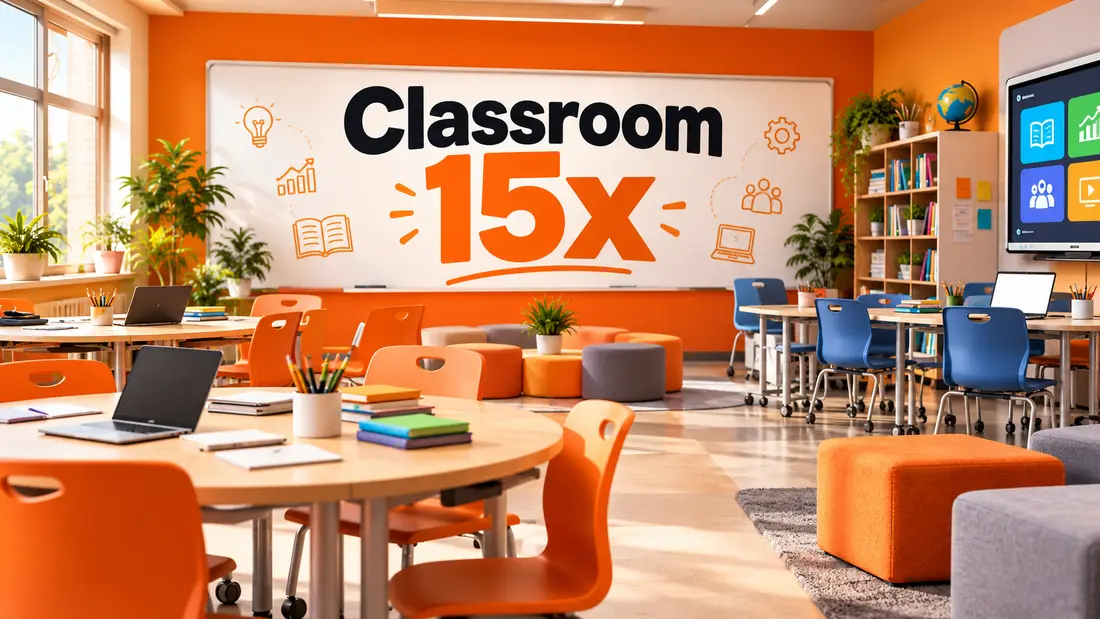
Walk into a traditional classroom and you’ll often see the same setup: rows of desks, one teacher at the front, and students working through the same lesson at roughly the same pace.
Classroom 15x takes a different approach.
It combines smaller learning groups, flexible classroom spaces, digital tools, and teaching methods that give students more ways to learn. The idea is simple: instead of asking every student to learn in exactly the same way, the classroom can change based on what students need.
The term Classroom 15x is used in more than one way. In some descriptions, it refers to a flexible classroom model built around groups of about 15 students. In others, it refers to a technology-focused learning approach that uses analytics, digital tools, gamification, and hybrid learning. At its core, both versions focus on making learning more flexible and personalized.
What Is Classroom 15x?
Classroom 15x is a modern learning model built around three main ideas:
- Smaller, focused student groups
- Flexible classroom layouts
- Technology-supported teaching
The “15” generally points to groups of around 15 students. The “x” represents flexibility and the ability to adapt the model to different grades, subjects, budgets, and school settings.
Instead of keeping students in fixed rows for an entire lesson, Classroom 15x can use different areas of the room for different activities.
For example, a teacher might start with a short lesson for the whole group. Students could then move to a collaboration area for a group task, followed by individual work in a quiet zone.
This setup gives teachers more room to adjust how they teach.
What Does the 15x in Classroom 15x Mean?
The number 15 is linked with the idea of smaller learning groups. A smaller group can make it easier for a teacher to notice who understands the lesson and who needs more help.
The “x” points to the flexible side of the model. A school does not have to copy one fixed classroom design. It can adjust the approach based on its space, technology, budget, grade level, and teaching goals.
That flexibility is one of the main ideas behind Classroom 15x.
How Does Classroom 15x Work?
Classroom 15x changes both the physical classroom and the way lessons are delivered.
Rather than relying on one teaching method for the entire class, teachers can move between short instruction, group activities, independent work, digital tasks, and peer learning.
Here are the main parts of the model.
Small-Group Learning
Smaller groups give teachers more chances to work directly with students.
A teacher can divide students based on their current level, interests, or learning needs. One group might work on a new concept while another practices a skill they have already learned.
This can also make quick checks easier. Instead of waiting until the end of a unit to find out who is struggling, a teacher can ask questions, run a short quiz, or review student work during the lesson.
Flexible Classroom Spaces
The room itself becomes part of the learning process.
A Classroom 15x setup may include several areas:
Instruction zone: Used for short lessons and teacher explanations.
Collaboration zone: Designed for group projects, discussions, and teamwork.
Focus zone: A quieter area for reading, testing, or independent work.
Creation zone: A space for digital projects, coding, design, and hands-on activities.
Furniture can also be moved when the activity changes. Rolling tables, lightweight chairs, movable dividers, and stackable seating can make this easier.
The goal is not to make the classroom look fancy. The goal is to make it easier to switch from one type of learning to another.
Technology-Supported Learning
Technology is another major part of Classroom 15x.
Students may use laptops, tablets, or Chromebooks along with a learning management system such as Google Classroom or Canvas.
Teachers can also use:
- Digital quizzes
- Live polls
- Exit tickets
- Progress dashboards
- Digital assignments
- Multimedia creation tools
- Coding and design software
These tools can give teachers quick feedback during a lesson.
Imagine a teacher running a five-question quiz and seeing that several students are struggling with the same topic. Instead of moving on, the teacher can pause and work with that group.
That is where technology becomes useful. It gives the teacher information that can guide the next step.
Flexible Lesson Structures
A Classroom 15x lesson does not have to follow the same pattern from start to finish.
A typical lesson might include:
- A 10-minute mini-lesson
- A 15-minute group activity
- A 10-minute individual practice session
- A 5 to 10-minute peer teaching activity
Students can move between different learning modes instead of sitting through one long lecture.
Key Components of the Classroom 15x Model
Classroom 15x is more than smaller groups and movable desks. Several parts work together to create the full model.
1. Small-Group, Student-Centered Instruction
The teacher can spend more time with smaller groups and provide tasks that match different student needs.
Instead of giving every student the exact same activity, teachers can create different levels of practice.
For example, one group may need basic practice, while another is ready for a more advanced task.
2. Flexible Furniture and Learning Zones
Fixed furniture can make it hard to change the room quickly.
Flexible furniture gives teachers more options. Tables can be pushed together for group work and separated for individual tasks.
Learning zones can also make classroom routines clearer. Students know where to go when they need to collaborate, work quietly, listen to the teacher, or create something.
3. Technology and Real-Time Data
Digital tools can help teachers see what is happening during the lesson.
A teacher dashboard might show quiz results, progress, or areas where students need more practice.
This can make it easier to adjust groups and lesson pacing.
4. Hybrid and Active Learning
Classroom 15x can also support hybrid learning.
Some students may be in the room while others join remotely. Digital tools can help everyone take part in polls, discussions, shared documents, and group activities.
Project-based tasks and gamified activities can also make students more active participants in the lesson.
How to Set Up a Classroom 15x Model
You do not need to rebuild an entire school to start using Classroom 15x.
A school can begin with one classroom and make changes over time.
Step 1: Review Your Current Classroom
Start by looking at how the classroom works today.
Ask questions such as:
- Where do students spend most of their time?
- Which students rarely participate?
- How long do transitions take?
- Where do students tend to get distracted?
- Which activities work well?
- Where do students need more support?
You can also track attendance, participation, time on task, and assignment completion.
This gives you a starting point before making changes.
Step 2: Create Learning Zones
Next, divide the classroom into useful areas.
You might create:
- An instruction area
- Collaboration tables
- A quiet focus corner
- A creation or maker space
You do not always need expensive furniture. Floor markers, rugs, signs, and the furniture you already have can help define each area.
It is also useful to set clear rules for each zone.
For example, the focus zone may have a low noise rule, while the collaboration zone may allow discussion.
Step 3: Add the Right Technology
Technology should solve a real classroom need.
Start with the basics:
- Reliable Wi-Fi
- Enough student devices
- A central LMS
- Digital assessment tools
- Teacher progress tracking
Once those basics work well, a school can add more tools for video, coding, design, collaboration, or interactive learning.
Step 4: Change the Lesson Structure
The next step is changing how lessons flow.
For example:
10 minutes: Teacher-led mini-lesson
15 minutes: Group activity
10 minutes: Individual practice
5 to 10 minutes: Peer teaching
During the lesson, teachers can use quiz results, polls, and student work to decide whether groups need more support or a harder task.
Step 5: Track Results and Make Changes
No classroom model should stay exactly the same forever.
Teachers can track:
- Participation
- Quiz results
- Time on task
- Assignment completion
- Student feedback
Then they can adjust the classroom layout, group sizes, activities, or technology.
Small changes can make a big difference.
Benefits of Classroom 15x
There are several reasons schools may consider the Classroom 15x approach.
More Personalized Teaching
Smaller groups give teachers more opportunities to work directly with students.
A teacher can spot a problem sooner and provide support before the student falls further behind.
Higher Student Engagement
Changing activities and classroom spaces can make lessons more active.
Students may spend part of a lesson listening, another part working with classmates, and another part completing independent work.
That variety can help break up long periods of passive learning.
Faster Teacher Feedback
Digital quizzes, polls, and exit tickets can provide quick information.
Instead of waiting days for an assignment to be graded, teachers can sometimes see where students are struggling during the lesson itself.
Better Collaboration
Dedicated collaboration areas make group work easier.
Students can discuss ideas, work on shared projects, teach each other, and create presentations together.
Better Teacher Visibility
Dashboards and classroom observations can give teachers a clearer picture of student progress.
This can help teachers decide which students need additional practice and which are ready for more advanced work.
A More Flexible Learning Experience
One student may learn best through discussion, another through independent practice, and another through hands-on work.
Classroom 15x gives teachers more ways to support these different learning preferences.
Classroom 15x Technology and Tools
Technology can play a major part in a Classroom 15x setup.
Learning Management Systems
Platforms such as Google Classroom and Canvas can help teachers organize lessons, assignments, communication, and student work.
Student Devices
Schools may use:
- Chromebooks
- Tablets
- Laptops
The choice depends on the school’s budget and teaching needs.
Assessment Tools
Quick digital assessments can include:
- Quizzes
- Polls
- Exit tickets
- Short knowledge checks
These tools can help teachers see what students understand before moving forward.
Analytics and Dashboards
Teacher dashboards can show information such as student progress, mastery, and learning gaps.
The goal is to turn classroom data into something teachers can use during everyday lessons.
Advanced Classroom Tools
Some versions of Classroom 15x also include:
- Gamified lessons
- VR and mixed-reality activities
- AI-supported learning paths
- Collaborative digital tools
These features can add new ways for students to interact with lessons.
Classroom 15x vs. Traditional Classroom
The difference becomes easier to understand when the two models are placed side by side.
| Feature | Traditional Classroom | Classroom 15x |
|---|---|---|
| Group size | Larger whole-class groups | Smaller focused groups |
| Furniture | Mostly fixed | Flexible and movable |
| Teaching | Often whole-class | Mixed learning modes |
| Technology | Supporting role | Built into lessons |
| Assessment | Often periodic | Frequent checks |
| Student work | Individual or whole class | Individual and group work |
| Layout | Mostly fixed | Multiple learning zones |
| Teacher feedback | Periodic | More frequent |
The key difference is flexibility. A traditional classroom often keeps the same structure for most of the lesson. Classroom 15x gives teachers more options.
How Much Does Classroom 15x Cost?
The cost depends on how much a school already has and how much it wants to change.
A basic setup using existing furniture may cost under $1,500.
A mid-range classroom with some new furniture and technology may cost around $3,000 to $8,000.
A larger setup with full furniture systems and advanced technology may cost $12,000 or more.
These are estimated ranges, not fixed prices. Actual costs can vary based on classroom size, furniture, devices, software, and local pricing.
How Long Does Implementation Take?
Simple furniture changes and learning zones may take a few weeks.
A full change that includes technology, lesson planning, teacher training, and new classroom routines can take a semester or even a full school year.
The adjustment period matters because both teachers and students need time to get comfortable with the new routines.
Classroom 15x for Teachers
For teachers, the model can provide more flexibility during lessons.
Instead of teaching the same material to every student at the same pace, teachers can work with smaller groups.
They can also use classroom data to adjust activities and identify students who need additional help.
Another useful part is the ability to change the classroom layout based on the activity.
A discussion may need one setup. A test needs another. A group project may need something completely different.
With movable furniture, the room can change with the lesson.
Classroom 15x for Students
Students can get more chances to participate, collaborate, and work independently.
They may move between different classroom zones, use digital tools, complete group projects, or work with a teacher in a smaller group.
This gives students a learning experience that is less tied to one desk and one teaching format.
Challenges of Implementing Classroom 15x
Classroom 15x can offer useful changes, but implementation is not always simple.
Cost
New furniture, devices, software, and network upgrades can increase the budget.
Teacher Training
Teachers need time to learn new tools and classroom routines.
Classroom Management
Students moving between different areas can create noise and distractions if expectations are unclear.
Technology Requirements
Reliable Wi-Fi, suitable devices, and working software are important.
Adapting Existing Spaces
Not every classroom has enough space for several learning zones.
For this reason, schools may need to start small and adapt the model to the space they already have.
Is Classroom 15x Right for Every School?
There is no single setup that works for every school.
Before adopting Classroom 15x, school leaders should look at:
- Available classroom space
- Technology budget
- Teacher readiness
- Student needs
- Existing devices
- LMS availability
- Ability to change classroom layouts
A school does not have to adopt every part of the model.
One classroom might start with flexible furniture and small-group teaching. Another might focus first on digital assessment and progress tracking.
The important part is matching the model to the school’s actual needs.
Classroom 15x Best Practices
If you are planning to introduce Classroom 15x, keep the first version simple.
Keep Learning Zones Simple
Students should understand what each area is used for without needing a long explanation.
Set Clear Rules
Every zone should have basic expectations for noise, movement, technology, and group work.
Use Technology for a Reason
Do not add a digital tool simply because it is new. Use it when it helps teachers teach or students learn.
Keep Lessons Varied
Mix teacher instruction with group work, independent practice, discussion, and hands-on tasks.
Track Student Progress
Use quizzes, assignments, participation, and classroom observations to understand what is working.
Adjust Groups When Needed
Student needs can change. Grouping should not always remain the same.
Ask for Feedback
Teachers and students experience the classroom every day. Their feedback can reveal problems that data alone may miss.
Frequently Asked Questions About Classroom 15x
What is Classroom 15x?
Classroom 15x is a flexible learning model that combines smaller student groups, adaptable classroom spaces, technology, and different teaching methods.
Why is it called Classroom 15x?
The “15” is generally connected with groups of around 15 students, while the “x” represents flexibility and the ability to adapt the model.
How many students are in a Classroom 15x group?
The model commonly refers to groups of around 15 students, although the exact group size can vary based on the school and classroom.
What technology does Classroom 15x use?
Technology may include laptops, tablets, Chromebooks, learning management systems, digital quizzes, polls, teacher dashboards, collaboration tools, and student creation software.
Is Classroom 15x a physical classroom design or a digital platform?
The term is used in both ways. Some descriptions focus on classroom design and teaching methods, while others describe a technology-focused learning platform. Both approaches center on flexible and personalized learning.
How much does Classroom 15x cost?
The supplied estimates range from under $1,500 for a basic setup to $12,000 or more for a larger setup with advanced furniture and technology. Actual costs depend on the school and its existing resources.
How do you set up a Classroom 15x classroom?
Start by reviewing the existing classroom, creating learning zones, adding useful technology, changing lesson structures, and tracking results.
What are the benefits of Classroom 15x?
Potential benefits include more personalized teaching, active student participation, faster feedback, better collaboration, improved teacher visibility, and a more flexible learning environment.
Can small schools use Classroom 15x?
Yes. The model can be adapted based on available space, budget, devices, and teaching needs. A school can start with a few changes instead of redesigning everything at once.
Does Classroom 15x work with hybrid learning?
The model can support hybrid learning through digital tools that allow students in the classroom and remote students to participate in activities, polls, discussions, and shared projects.
Final Thoughts on Classroom 15x
Classroom 15x is built around a simple idea: classrooms do not have to stay fixed.
Smaller groups can give teachers more time with individual students. Flexible spaces can make it easier to switch between activities. Digital tools can provide quick feedback about student progress.
The best part is that schools do not need to change everything overnight.
A classroom can start with movable furniture, a few learning zones, and better small-group teaching. From there, teachers can add technology and new lesson formats as they become useful.
In the end, Classroom 15x is less about buying the latest classroom equipment and more about creating a learning space that can change when students and teachers need it to.
Read Also: JoinCRS com Explained: How to Join Classroomscreen and Use Classroom Codes